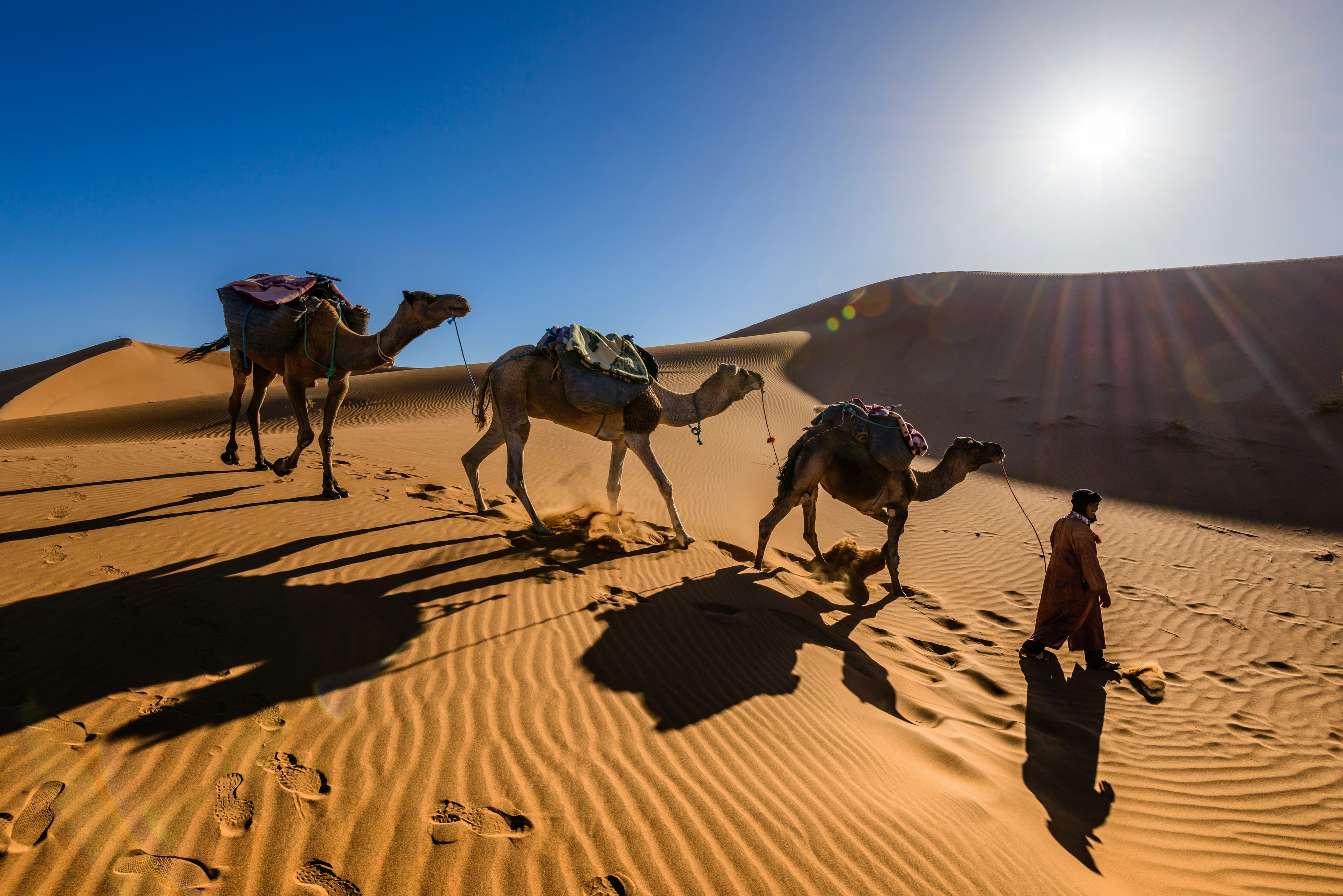
Camel Safari: Cost, Duration, and What It Feels Like
A standard tourist camel safari near Sam Sand Dunes runs 30 minutes to an hour, usually timed to end around sunset. Short rides like this are the most common option and are typically inexpensive — a few hundred rupees per person — with longer multi-hour desert treks available at a higher price if you want more time in the saddle.
The appeal is the pace and the feel: you're close to the sand, moving slowly enough to actually look around, and it's the image most people have in mind when they picture a Rajasthan desert trip. It's also genuinely traditional — camels have been the working animal of the Thar Desert for centuries, not a tourist invention.
The trade-off is comfort and distance. A camel's gait is bumpy, and longer rides can strain your back or knees if you're not used to it. You'll also cover far less ground than a jeep in the same amount of time, so if seeing a lot of the desert matters more than the ride itself, this isn't the best option on its own.
Jeep Safari: Cost, Duration, and What It Feels Like
A jeep safari typically runs one to two hours and is priced per vehicle rather than per person, so the per-person cost depends on how many people you're splitting it with — as a group, it often works out comparable to or not much more than a camel ride, even though the vehicle price is higher upfront.
The main draw is dune-bashing: accelerating up and over large dunes, which is a genuine adrenaline hit rather than a slow scenic ride. Jeeps also reach dune areas further from the main tourist strip, so you can end up somewhere quieter than where most camel rides operate.
It's a faster-paced, less traditional experience than a camel safari, but it's also more accessible — no mounting or dismounting an animal, no getting used to an unfamiliar gait, and it's a better fit if you're short on time or traveling with anyone who'd struggle with a camel ride.
Which One Should You Choose?
First-time visitors and couples who want the classic sunset-over-the-dunes photo are usually happiest with a camel safari — it's slower, more photogenic, and matches the mental image most people have of a Jaisalmer trip.
Families traveling with young children or elderly relatives generally do better with a jeep safari, since there's no risk of an uncomfortable or intimidating camel mount, and it covers more ground in less time with less physical demand.
If you're short on time, want to see more of the desert, or you're drawn to the dune-bashing thrill itself, go with a jeep. If time and budget allow, doing a short camel ride for the sunset and a jeep safari for everything else is the combination most repeat visitors recommend.
Can You Do Both in One Trip?
Yes, and it's a common combination rather than an either-or decision. Many desert camps already bundle a camel ride at sunset with a jeep transfer or a separate dune-bashing session as part of their standard overnight package — check what's included before you pay extra for either one separately.
If your camp doesn't include both, it's usually easy to add the one that's missing on-site, since both camel and jeep operators work right at the dunes entrance during peak hours.
Practical Tips for Booking Your Safari
Book through your desert camp or hotel, or a safari operator they recommend, rather than the independent touts who approach cars at the dunes entrance — prices there are inconsistent and it's easy to end up paying more for less time than you agreed to.
Confirm exactly what's included before you pay: ride duration, where you're dropped off, and whether a return transfer back to your camp or hotel is part of the price.
Safaris are typically scheduled for late afternoon into sunset, so arrive with enough buffer time — dune traffic during peak season (December and January, and Desert Festival week in February) can slow things down.